
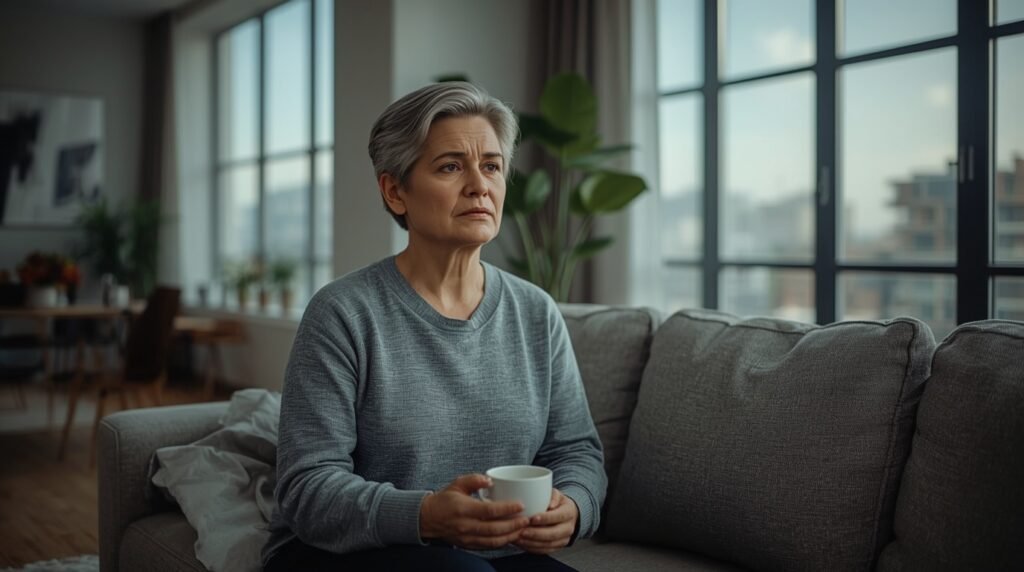
One thing surprises many Bell’s palsy patients.
Even after the face starts improving…
they still do not feel fully “normal.”
The smile may slowly come back.
The eye may close better.
But the body still feels exhausted.
Many people describe:
- lingering fatigue
- brain fog
- neck tightness
- poor sleep
- anxiety
- emotional sensitivity
- tension throughout the body
This is why Bell’s palsy recovery is often about more than facial muscles alone.
The nervous system matters too.
Why Some Patients Feel Drained During Recovery
A lot of people expect Bell’s palsy to be a simple facial issue.
But many patients notice the experience affects their whole body.
Especially in the early weeks, people often describe:
- sleeping poorly
- feeling emotionally overwhelmed
- becoming more stress-sensitive
- muscle tightness throughout the neck and shoulders
- increased fatigue after social interaction
- difficulty relaxing
Some even say:
“My face improved faster than my energy.”
That is actually more common than people think.
The Nervous System Plays a Bigger Role Than Many Realize
The facial nerve is closely connected to the nervous system.
When the body has already been under prolonged strain from:
- stress
- poor sleep
- illness
- burnout
- emotional overload
recovery can feel slower and more exhausting.
This is especially common among professionals and office workers in Burnaby who continue working through recovery.
Many patients spend the entire day:
- staring at screens
- talking in meetings
- forcing facial movement
- suppressing stress
- sleeping inconsistently
The nervous system never fully powers down.
And recovery often becomes harder because of that.
Why Neck and Shoulder Tension Often Matters
A pattern many practitioners notice:
Bell’s palsy patients frequently carry significant tension around:
- the neck
- jaw
- upper shoulders
- base of the skull
This tension may increase feelings of:
- facial tightness
- heaviness
- headaches
- fatigue
- eye strain
Some patients even notice their facial symptoms worsen after stressful days or poor sleep.
The body does not separate stress from physical recovery very well.
Everything interacts.
How Acupuncture May Support Whole-Body Recovery
Many people explore acupuncture not only for facial symptoms, but because the entire body feels out of balance during recovery.
In Traditional Chinese Medicine, acupuncture is commonly used to help support:
- circulation
- muscle relaxation
- stress recovery
- nervous system balance
- sleep quality
Some patients report feeling:
- calmer after treatment
- less tense
- mentally lighter
- physically more relaxed
This matters because recovery is not only about movement in the face.
It is also about helping the body shift out of prolonged stress mode.
Why Rest Is More Important Than Many Patients Expect
One difficult reality:
many people try to “push through” Bell’s palsy recovery.
They continue:
- overworking
- sleeping poorly
- carrying stress constantly
- ignoring fatigue
But the body often heals better when recovery becomes intentional.
That may include:
- deeper rest
- reducing overstimulation
- improving sleep consistency
- lowering stress load
- restoring healthier routines
For many patients, recovery improves when the nervous system finally begins calming down.
From a Traditional Chinese Medicine Perspective
Traditional Chinese Medicine often views facial paralysis as more than a local issue.
《黄帝内经》强调:
“正气存内,邪不可干”
When the body’s recovery capacity becomes weakened, imbalance may appear more easily.
This is why treatment approaches in TCM often consider:
- circulation
- sleep
- stress
- digestion
- emotional strain
- overall body balance
Recovery is not only about the face.
It is about helping the whole body regain stability.
Final Thoughts
If you are recovering from Bell’s palsy and still experiencing:
- fatigue
- stress sensitivity
- neck tension
- poor sleep
- emotional exhaustion
you are not necessarily “recovering wrong.”
Many patients discover that Bell’s palsy recovery involves the nervous system, stress levels, and whole-body recovery far more than they expected.