
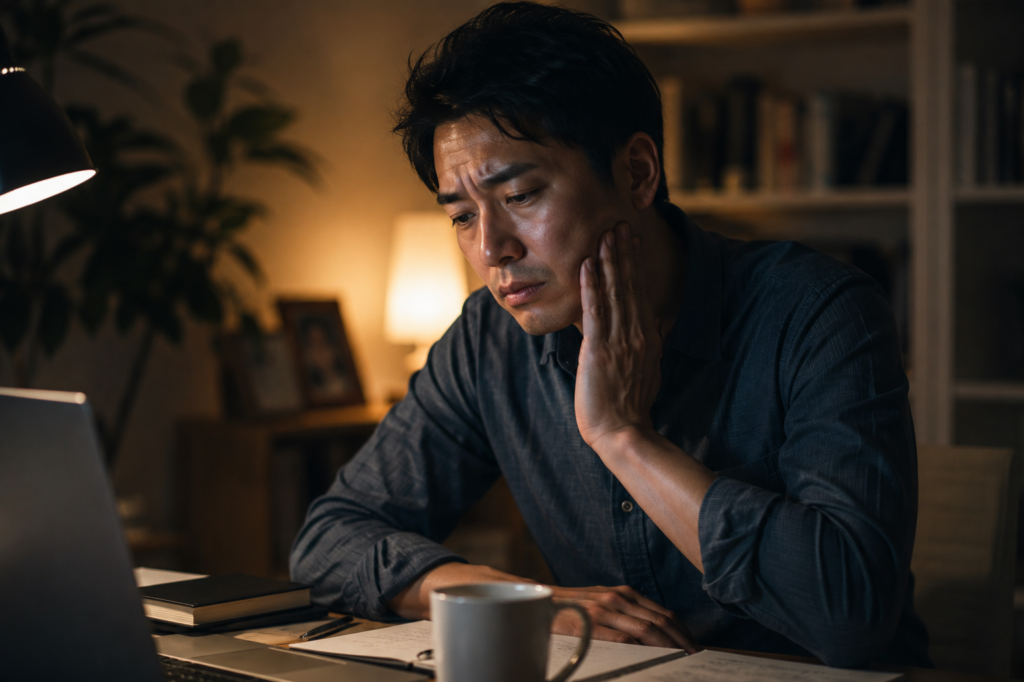
A lot of people do not realize how much anxiety shows up in the face.
Not emotionally.
Physically.
Many patients dealing with chronic stress or anxiety begin noticing:
- jaw tightness
- facial tension
- twitching near the eyes
- pressure around the temples
- tightness while chewing
- headaches around the forehead
- stiffness around the mouth
Some people even feel like one side of the face is “pulling” or harder to relax.
And the more stressed they become…
the tighter the face feels.
Anxiety Changes the Way the Body Holds Tension
When the nervous system stays under stress for long periods, the body often shifts into a protective state.
Muscles begin tightening unconsciously.
Especially around:
- the jaw
- forehead
- neck
- shoulders
- eyes
This is why many anxious or burned-out professionals in Burnaby constantly clench their jaw without realizing it.
Some even wake up with:
- sore facial muscles
- tight temples
- headaches
- teeth grinding
- facial fatigue
The body never fully relaxes.
Even during sleep.
Why the Face Is So Sensitive to Stress
The face contains an enormous amount of muscular and nerve activity.
And unlike the legs or back, facial tension is difficult to “stretch out.”
So stress often accumulates silently.
Over time, people may begin experiencing:
- chronic jaw tension
- facial asymmetry during stress
- twitching around the eyes
- pressure behind the eyes
- difficulty relaxing facial muscles
- tension headaches
This becomes even more common among people with:
- high screen exposure
- perfectionist personalities
- emotional suppression
- chronic overthinking
- poor sleep
The nervous system stays hyper-alert for too long.
And eventually the body starts physically wearing that tension.
Why Anxiety Symptoms Often Get Misunderstood
One difficult reality:
many people think they are developing a purely “facial problem.”
But sometimes the nervous system is heavily involved.
Patients often become even more anxious after noticing facial symptoms.
Then stress increases.
Then the muscles tighten even more.
The cycle feeds itself.
This is why many people notice symptoms worsen during:
- emotional stress
- lack of sleep
- burnout
- long workdays
- conflict or emotional pressure
The body reacts to emotional strain physically far more than people realize.
How Acupuncture and Tui Na May Help Reduce Facial Tension
Many patients seek acupuncture because they feel unable to “turn off” tension in the face and jaw.
In Traditional Chinese Medicine, acupuncture is commonly used to help support:
- nervous system relaxation
- circulation
- muscle release
- stress recovery
- sleep quality
Tui Na may also help reduce:
- jaw tightness
- neck stiffness
- shoulder tension
- stress-related muscle restriction
Some patients describe feeling:
- their jaw unclench naturally
- less pressure around the temples
- calmer mentally
- physically lighter after treatment
The goal is not simply temporary relaxation.
It is helping the nervous system stop staying in constant defense mode.
From a Traditional Chinese Medicine Perspective
Traditional Chinese Medicine has long connected emotional stress with muscular tension and circulation.
《黄帝内经》提到:
“怒则气上”
Emotional strain may affect circulation and tension patterns throughout the body.
In modern life, chronic anxiety often keeps people mentally activated for too long.
And eventually the body starts reflecting that stress physically.
Especially in the face, jaw, and neck.
The Dangerous Part About Chronic Facial Tension
Many people normalize symptoms like:
- jaw clenching
- tension headaches
- facial tightness
- poor sleep
- teeth grinding
But chronic nervous system tension can slowly affect:
- sleep quality
- recovery capacity
- posture
- emotional resilience
- muscle fatigue
The body was never designed to stay tense every hour of every day.
Final Thoughts
If you constantly experience:
- jaw tightness
- facial tension
- eye twitching
- stress headaches
- anxiety-related muscle tension
your nervous system may already be carrying more pressure than you realize.
Sometimes the face becomes the place where chronic stress finally becomes visible.